
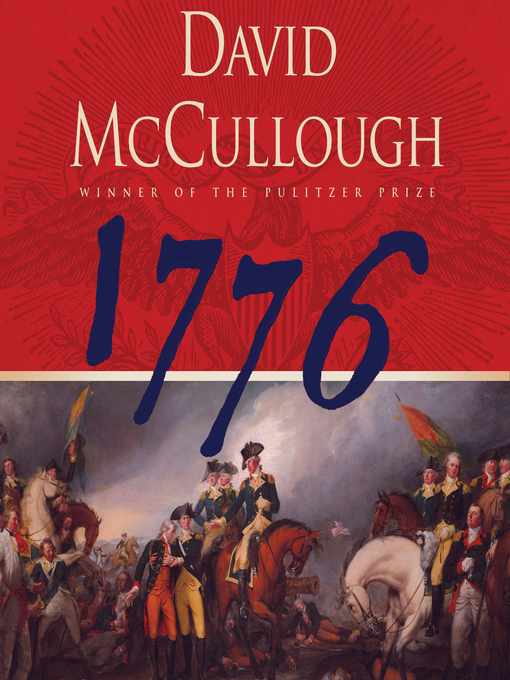
1776, written by premier historian David McCullough, is a detailed account of military action in this critical year in American history. It provides a timely reminder of the sacrifices early Americans made to establish a free country, and the tenuous nature of securing a military victory.
This post may contain Amazon Affiliate links. As an Amazon Associate I earn a small commission, at no additional cost to you, from qualifying purchases. (This in no way affects the honesty of my reviews!) All commissions will be donated to the ALS Association.
I read 1776 as part of the 2026 Thoughtful Reading Challenge. July’s challenge was to read a book set during the American Revolution in honor of Independence Day and America’s 250th birthday. 1776 is a book that meets that criteria to a T.
I can’t remember the last time I studied the American Revolution in a classroom setting – maybe middle school or high school? So, a lot of the information in 1776 was either a refresher or completely new to me. In case you need a refresher as well, here’s a very high-level timeline:
The first battles of the war at Lexington and Concord took place the prior year in April 1775. 1776 was spent in the Northeast and the results casted some doubt on George Washington’s ability to lead American forces to a victory.
The year began with a victory as the American army was able to break the siege the British army had on Boston, but the next significant victory wouldn’t come until the end of the year at Trenton. In between the two wins were a series of embarrassing losses that allowed the American army to practice its retreating skills over and over.
The British hands-down had naval superiority, and their army was disciplined, trained, and outnumbered the Americans, especially when you factor in the Hessian mercenaries who were supplementing them. In comparison, the Americans were a rag-tag group, some of whom didn’t even have shoes, let alone uniforms. This was particularly problematic when they had to march through the snow. They sometimes went unpaid, sickness ran rampant, and desertion rates were high, especially around harvest time. Needless to say, reenlistment rates weren’t where they needed to be.
Despite all this, the Americans persevered and received a much-needed morale boost when they defeated Hessian forces in Trenton in a surprise attack the day after Christmas (immediately preceded by the Washington crossing the Delaware moment). Thus ended a year of hardship and mixed military results. Spoiler alert: the Americans eventually won, but a treaty wasn’t signed until 1783.
A few things that stood out to me:
- The author provides a profile of George Washington that somewhat surprised me. He’s been built up as a superhero of almost mythical proportions. While he was an extraordinary man, he was also very human. For example, he was fairly indecisive. The wealthy Virginian also frequently got frustrated with his New England, rabble rousing soldiers, many of whom, in true American fashion, didn’t like to be told what to do. Fortunately, Washington was persistent, steadfast and loyal to the cause. Otherwise, we Americans might be speaking…oh, never mind.
- Another thing that stood out to me was that there was not consensus regarding the war on either side of the Atlantic. Some British leaders were opposed to the war, and some people living in America were staunch loyalists who provided aid and comfort to the British army.
- I was also reminded of how uncomfortable and slow-moving military operations were in the past. I already mentioned how some soldiers didn’t have shoes, which is terrible when you have to walk everywhere. Add pestilence, filth, and canon ball injuries, and you have the military experience from hell. No thanks. To make matters even worse, sometimes they had to squat in this squalor while their leaders waited for instructions VIA MAIL.
I think history buffs and people who want to learn more about the American Revolution will enjoy and learn from 1776. McCullough goes into great detail about a variety of topics, and I especially liked his use of letter excerpts to make the history feel more personal.
If you read a book set during the American Revolution, I’d love to hear about it!
**Reminder – August’s challenge is to read a spy novel.


Great review! I also enjoyed the book but dang, McCullough can sure get down in the weeds. And I like reading about history… With his level of examination, the reader certainly can get a pretty good understanding of what life was like for the soldiers of this era – and it was not a good life. Excellent point you make about Washington. For a large portion of the book, it doesn’t look like things are going to work out for him or our Army. But alas, it did! Before reading this book, I had seen 1776 many times in book stores and libraries but did not realize that the book was only about the year 1776. I guess that’s why I was hoping for a more overarching story of the Revolutionary War versus an almost day by day playing of the year 1776.
You mentioned about the lack of consensus regarding the war. While reading 1776, I was thinking that I sure would like to find a good (and not too long) book on prominent loyalists and their lives in the US, especially after the war. I have heard about Ben Franklin and his son being on opposite sides so there must be some fascinating stories about those in the US who did not want independence.
Great pick for the 250th!
LikeLiked by 1 person